
The Complete Guide to the HGV Driving Test in Chelmsford
Taking your HGV driving test can feel like the biggest hurdle on your journey towards becoming a professional driver. Knowing exactly what to expect helps reduce nerves, improve confidence and give you the best possible chance of passing.
Whether you’re completing your Category C (Class 2), Category C+E (Class 1) or progressing through Car to Artic training, understanding how the HGV driving test works is just as important as learning to drive the vehicle itself.
This guide explains every stage of the HGV driving test, what the examiner is looking for, common mistakes and how you can prepare.
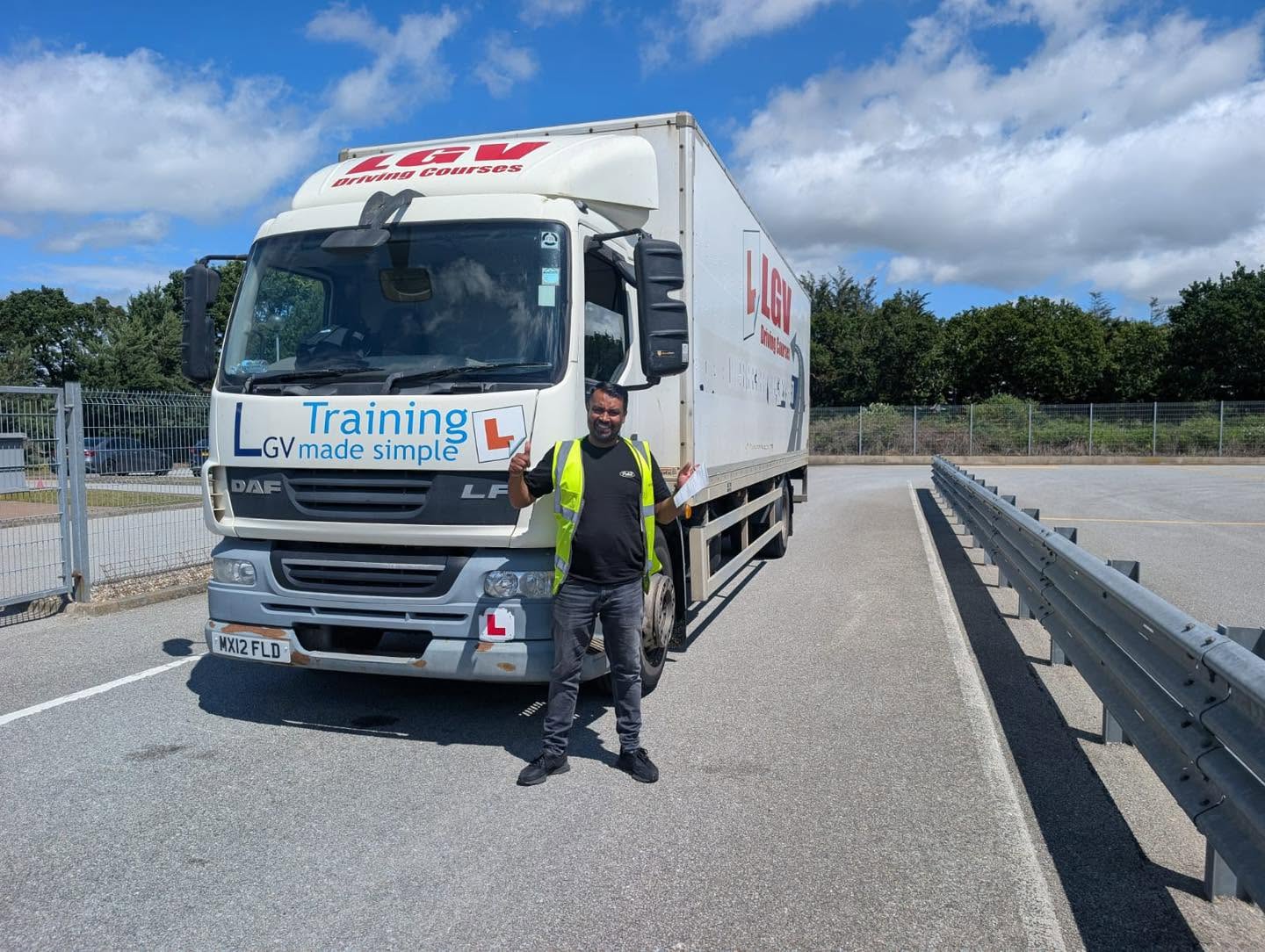
What Is the HGV Driving Test?
The HGV driving test is designed to assess whether you can safely control and operate a heavy goods vehicle in real road conditions.
Unlike a standard car driving test, the examiner is assessing your ability to:
- Control a much larger vehicle safely
- Anticipate hazards
- Plan well ahead
- Demonstrate excellent observation
- Drive professionally and confidently
The aim is not perfect driving.
The aim is to show that you’re a safe, competent and responsible HGV driver.
Before Your HGV Driving Test
Before arriving for your HGV driving test, make sure you:
- Bring all required documentation
- Arrive in good time
- Wear comfortable clothing and suitable footwear
- Get a good night’s sleep
- Eat before your appointment
- Stay hydrated
Many learners find that arriving early helps settle nerves and improves focus before the test begins.
If you’re unsure about your readiness, consider additional support through our refresher training or structured flexi training options.

What Happens During the HGV Driving Test?
Although every route is different, the structure of the HGV practical driving test follows a consistent format.
Vehicle Safety Questions
Before driving, the examiner may ask questions about vehicle safety, including:
- Warning lights
- Tyres
- Brakes
- Steering
- Daily walkaround checks
These questions demonstrate your understanding of safety responsibilities as a professional driver.
Driving Assessment
The majority of the test is spent driving on public roads.
You may encounter:
- Residential roads
- Town driving
- Dual carriageways
- Roundabouts
- Junctions
- Traffic lights
- Hills
- Changing speed limits
The examiner is assessing how safely and confidently you adapt to real road conditions.
Manoeuvres
Depending on your licence category, you will complete manoeuvres that demonstrate control of the vehicle.
These may include:
- Controlled reversing
- Accurate positioning
- Low-speed vehicle control
The examiner is not assessing speed.
They are assessing safety, control and accuracy.
What Is the Examiner Looking For?
Throughout the HGV driving test, the examiner continually assesses your ability to drive safely and professionally.
Mirror Checks
Regular observation is essential.
You should check your mirrors before:
- Signalling
- Changing speed
- Changing direction
- Pulling away
- Stopping
Poor mirror use remains one of the most common reasons candidates fail.
Planning Ahead
Professional HGV drivers think well ahead.
You must demonstrate that you can:
- Anticipate hazards
- Read road conditions
- Leave safe stopping distances
- Position the vehicle correctly
Forward planning leads to smoother, safer driving.
Speed Control
Maintaining an appropriate speed is critical.
Driving too fast creates risk.
Driving too slowly can indicate lack of confidence.
The key is control and awareness.
Road Positioning
Large vehicles require careful positioning.
The examiner assesses:
- Lane discipline
- Roundabout approach
- Junction positioning
- Cornering
- Clearance around obstacles
Hazard Awareness
You are expected to identify risks early, including:
- Pedestrians
- Cyclists
- Parked vehicles
- Traffic flow changes
- Road layouts
- Weather conditions
Early reactions show confidence and professionalism.
Frequently Asked Questions
Is the HGV driving test difficult?
Most learners find it challenging due to vehicle size, but proper training makes a significant difference.
Can I fail for one mistake?
Not always. Minor faults are allowed, but serious or dangerous faults result in failure.
How many manoeuvres are included?
This depends on the licence category, but reversing and controlled vehicle handling are key parts.
How Long Is the HGV Driving Test?
The HGV driving test typically lasts around one hour. The exact duration can vary depending on traffic conditions, test route, and licence categoryYour instructor will explain exactly what to expect during your training.
Learn With Confidence at Showtime HGV Training
At Showtime HGV Training, we prepare learners for far more than simply passing their HGV driving test in Chelmsford.
Our experienced instructors help you understand professional driving standards, giving you the confidence and practical skills needed for a successful career in transport and logistics.
Call 07432610679 or email showtimetraining@hotmail.com to book your training or get expert advice today.